Home

/

Brand intelligence

Brand intelligence: Surfacing hidden patterns to prevent repeat mistakes

Overview

Our production teams were making repeated mistakes, despite having brand guidelines. One team proposed a solution - a new brand guidelines hub, but I questioned whether that would solve the real issue. 

After revisiting the research, I reframed the problem and proposed a smarter approach: surface brand-related insights directly from real project data (feedback, revisions, emails). This concept became the new direction we aligned on as a team.

The problem

Despite having access to brand guidelines, our production teams were still making the same brand mistakes, often only caught late in the process and resulting in repeated revision rounds and low client satisfaction.
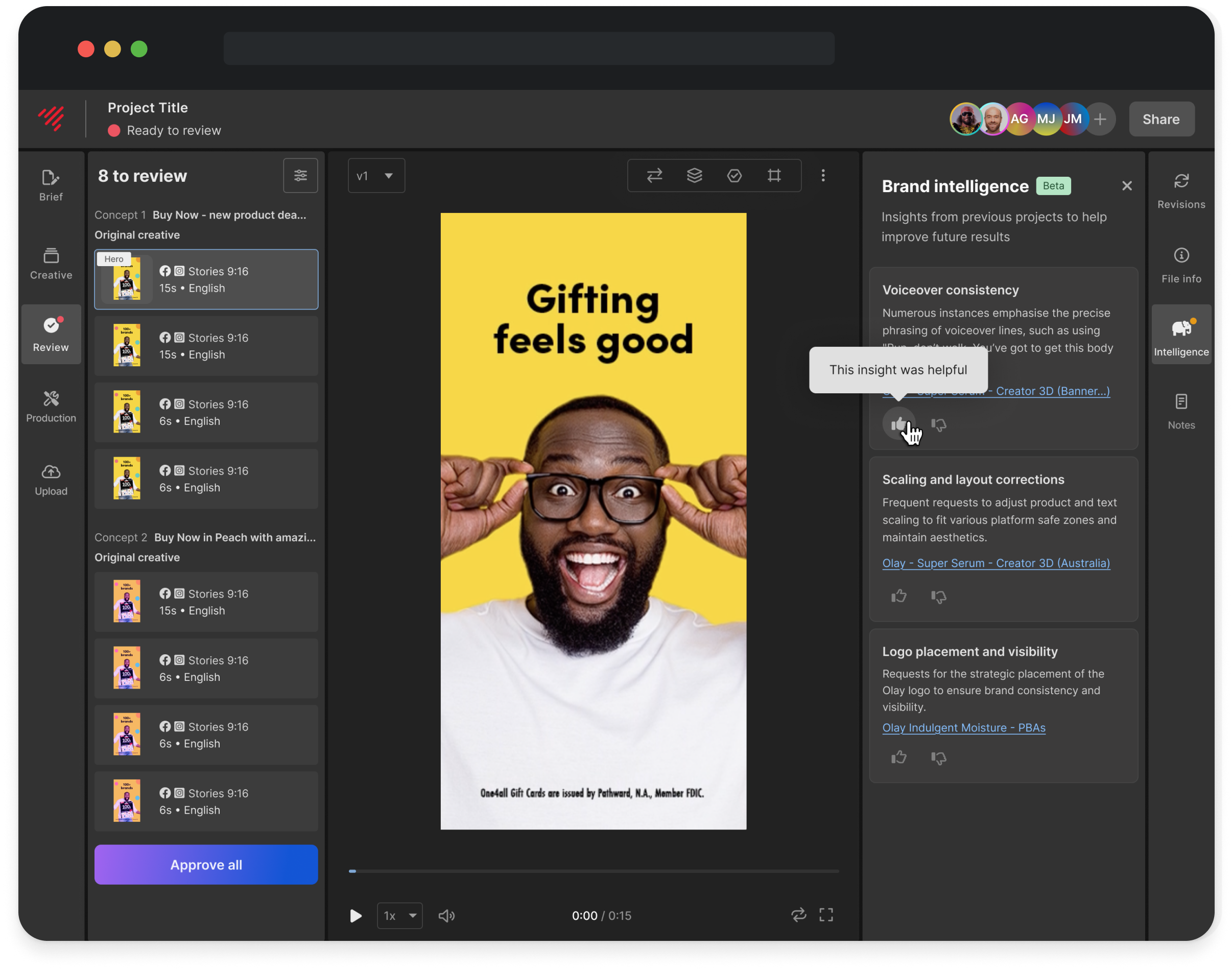
Brand intelligence final proposal

The goal

To make sure everyone working on a brand - whether designer, QA, or creative lead, had access to the most relevant, up-to-date brand information at every stage of the creative process.

Context

This project was handed to me after the initial solution - a revised brand profile - was decided on. I was tasked with mocking up the UI for this solution. While I initially pushed back on the value of this, I agreed to move forward in order to have visuals to centre the discussion around.
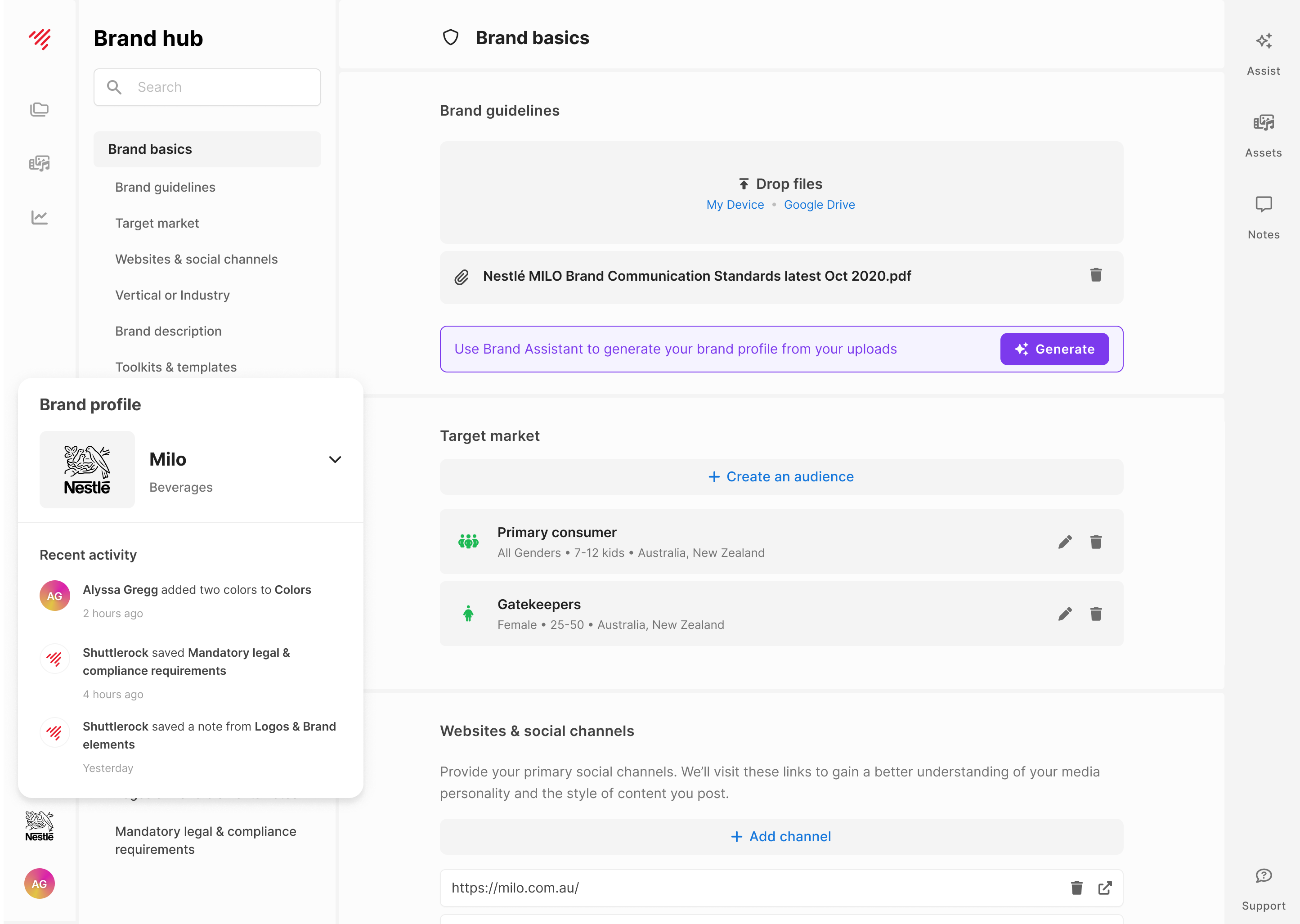
Initial proposal - a revised brand profile

Reframing the problem

Hesitation from the team around the value of an updated brand profile allowed me to pause and reframe. Instead of assuming ‘we need better guidelines’, I took a step back and asked:

When do mistakes happen, and what context is missing in that moment?

After reviewing internal workflows and project data, I realised the issue was timing and visibility, not lack of documentation.

The concept

What if we used the data we already collect - revision comments, emails, and phone calls - to surface common brand issues before they happen?

I mocked up a concept that:

  • Flagged recurring issues automatically (e.g. tone, logo use, framing)
  • Integrated directly into production tooling
  • Used AI to cluster and highlight patterns over time
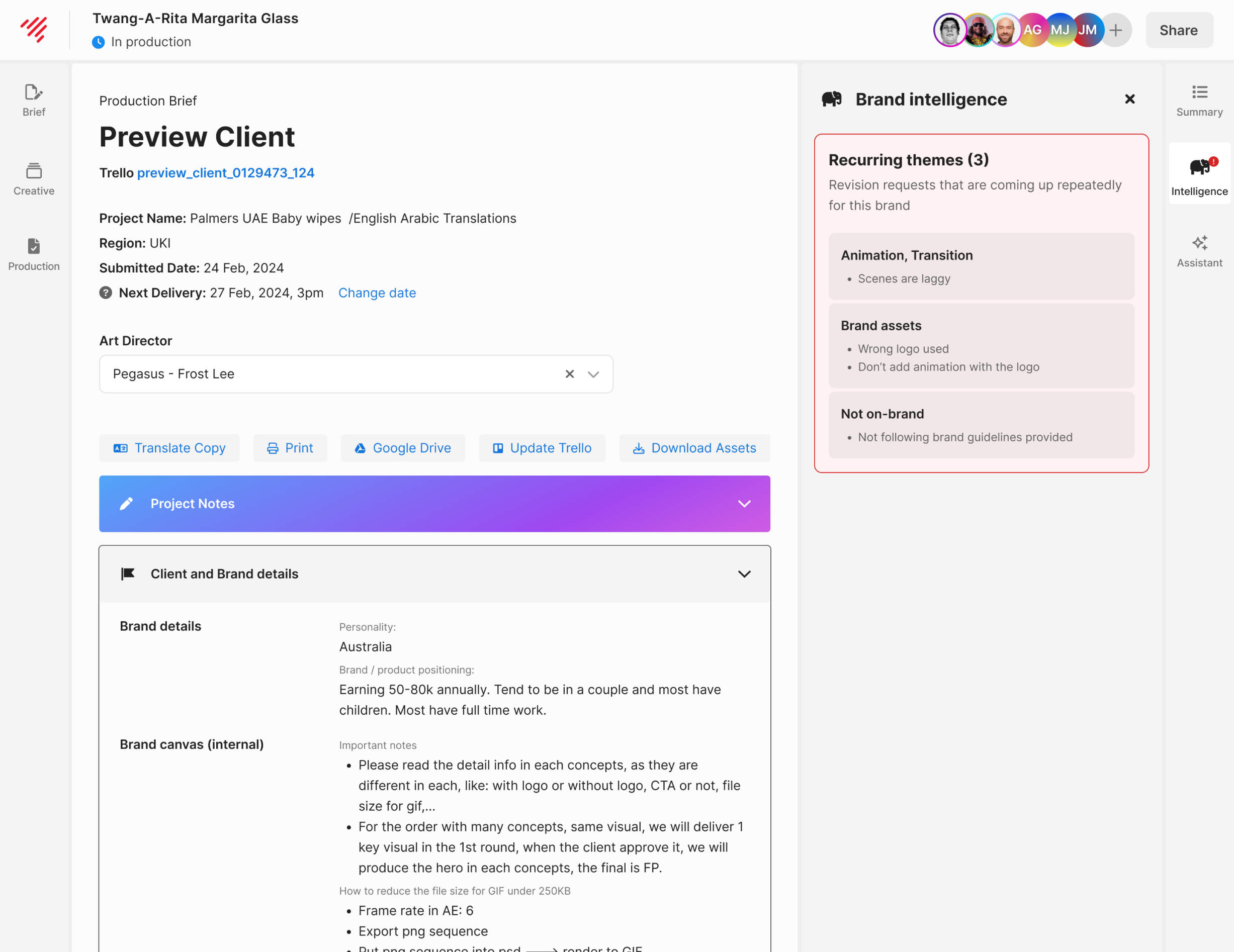
Early concept showing recurring themes for production users
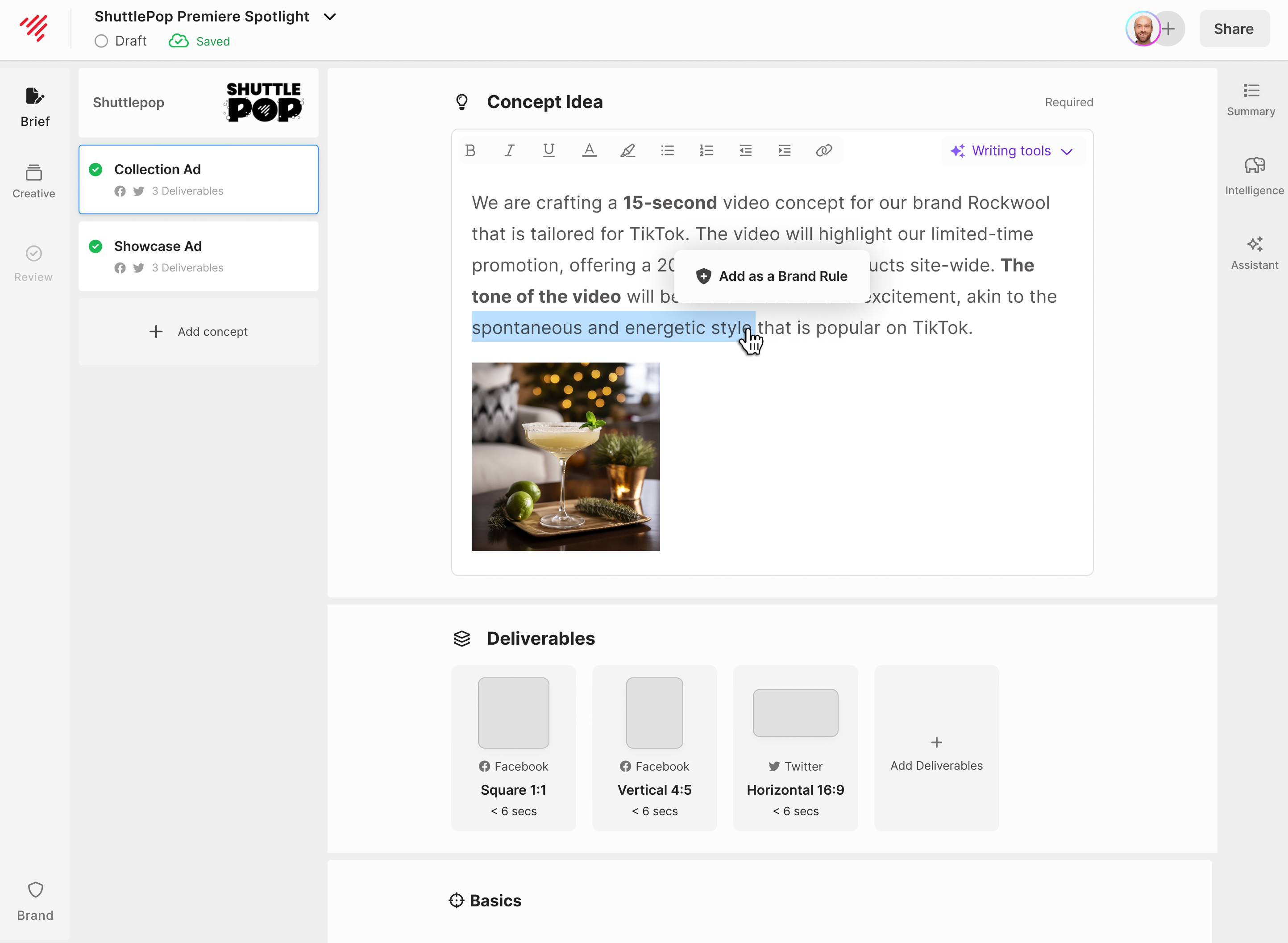
Selecting content to add as a new brand rule
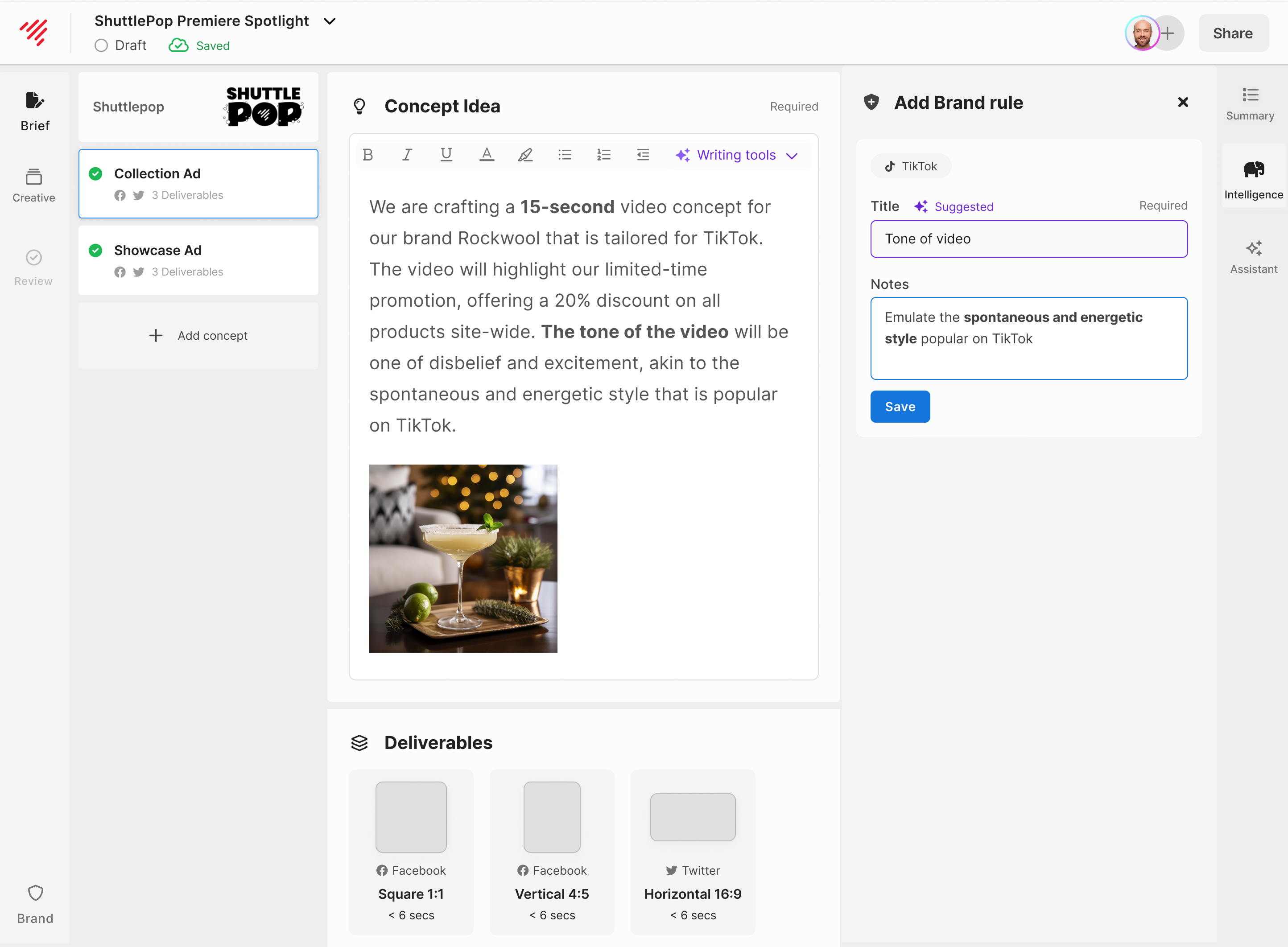
Adding a new brand rule

User feedback

After reviewing the initial concept with users, we determined there were adjustments we could make to improve the output and usefulness.

  • Allowing teams to mark a issue as helpful for this concept or not
  • Insights should be reviewed and summarised by a Creative Director, then shared with designers to avoid ambiguity
  • It should be easy to dismiss or hide irrelevant insights to reduce noise
  • They'd like to see a history of revision insights at any time, even those that were marked as not relevant
  • We’d have to work on tweaking the AI prompt as the feature was used to ensure we were getting the most accurate themes

Outcome

With a new iteration of the concept, I shared with the PM’s, original designer, engineers, and stakeholders. The feedback was positive and the value was clear, both from a business and user perspective. This resulted in:

  • Buy-in to shift direction toward a smarter, insight-driven solution
  • Alignment of two teams around a more scalable, embedded way to prevent brand errors
  • The revised approach is now being scoped for implementation
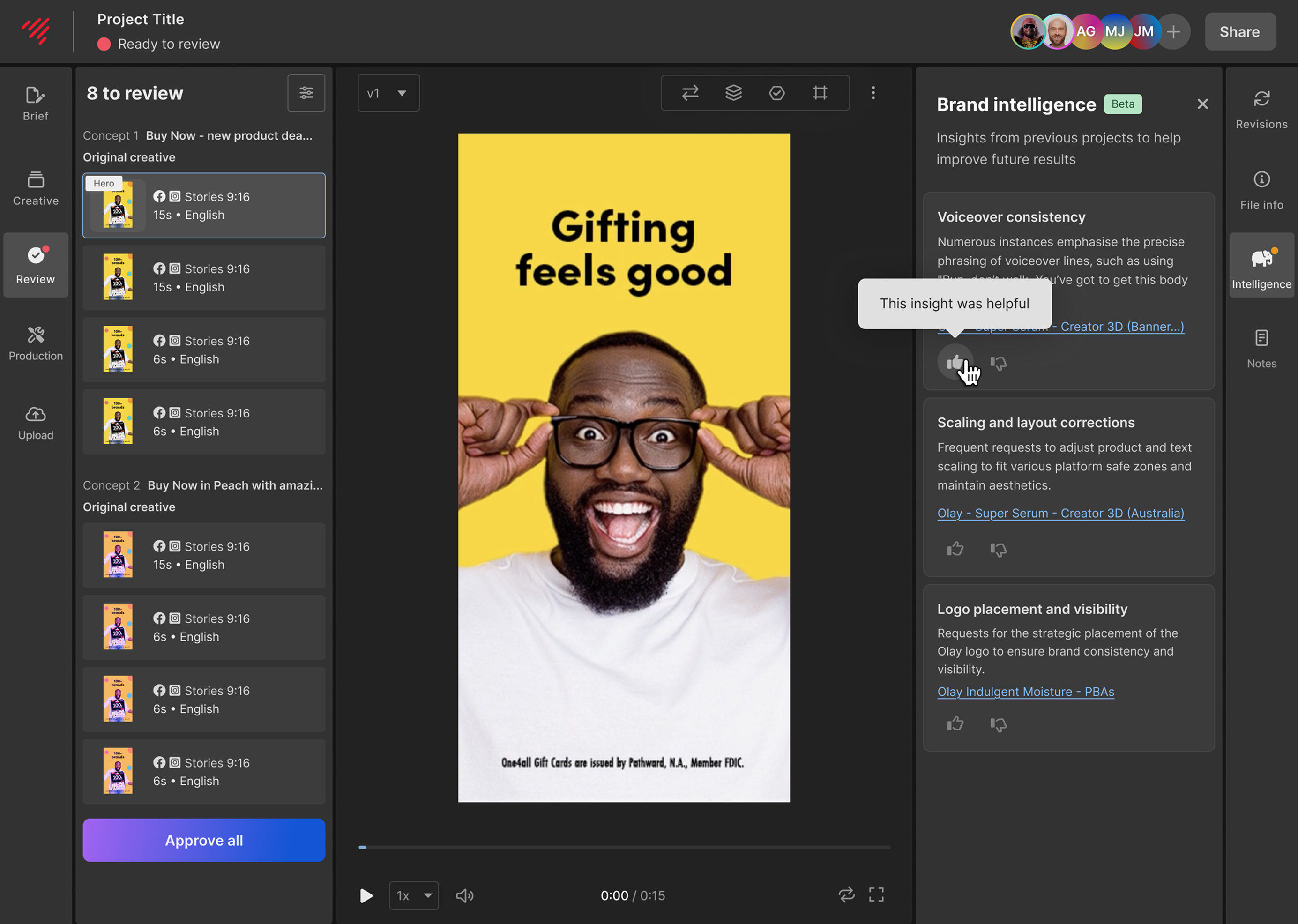
Final concept of Brand Intelligence in the Review stage

Reflection

This was a reminder that the first solution isn’t always the right one, and that sometimes your real value as a designer is in helping teams slow down, reframe, and re-align.

More projects
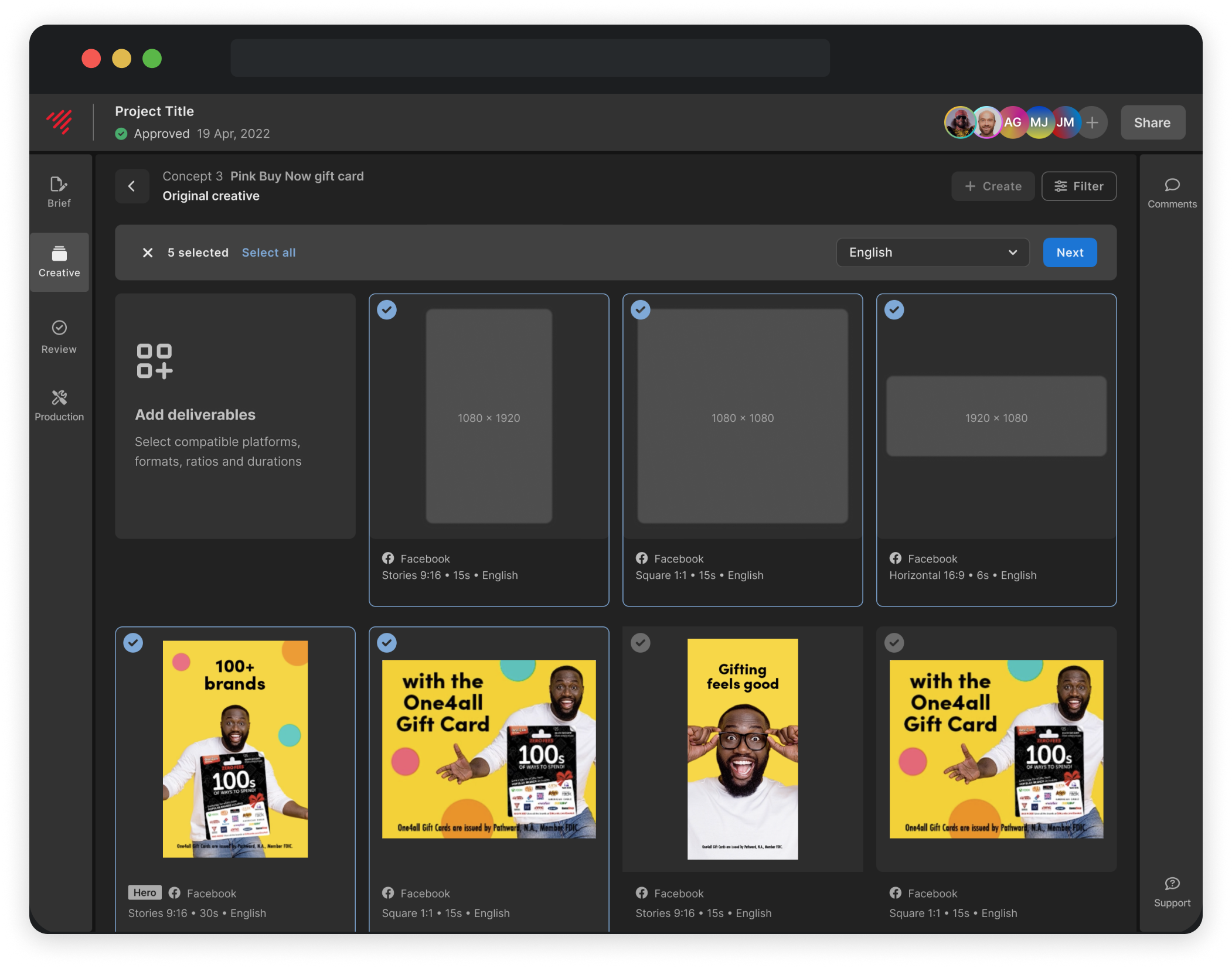
Variations: Designing a faster way to scale approved creative

A new flow that lets users scale from approved creative, without starting a new project. Now powering more than 40% of all creative through the platform.

View project →
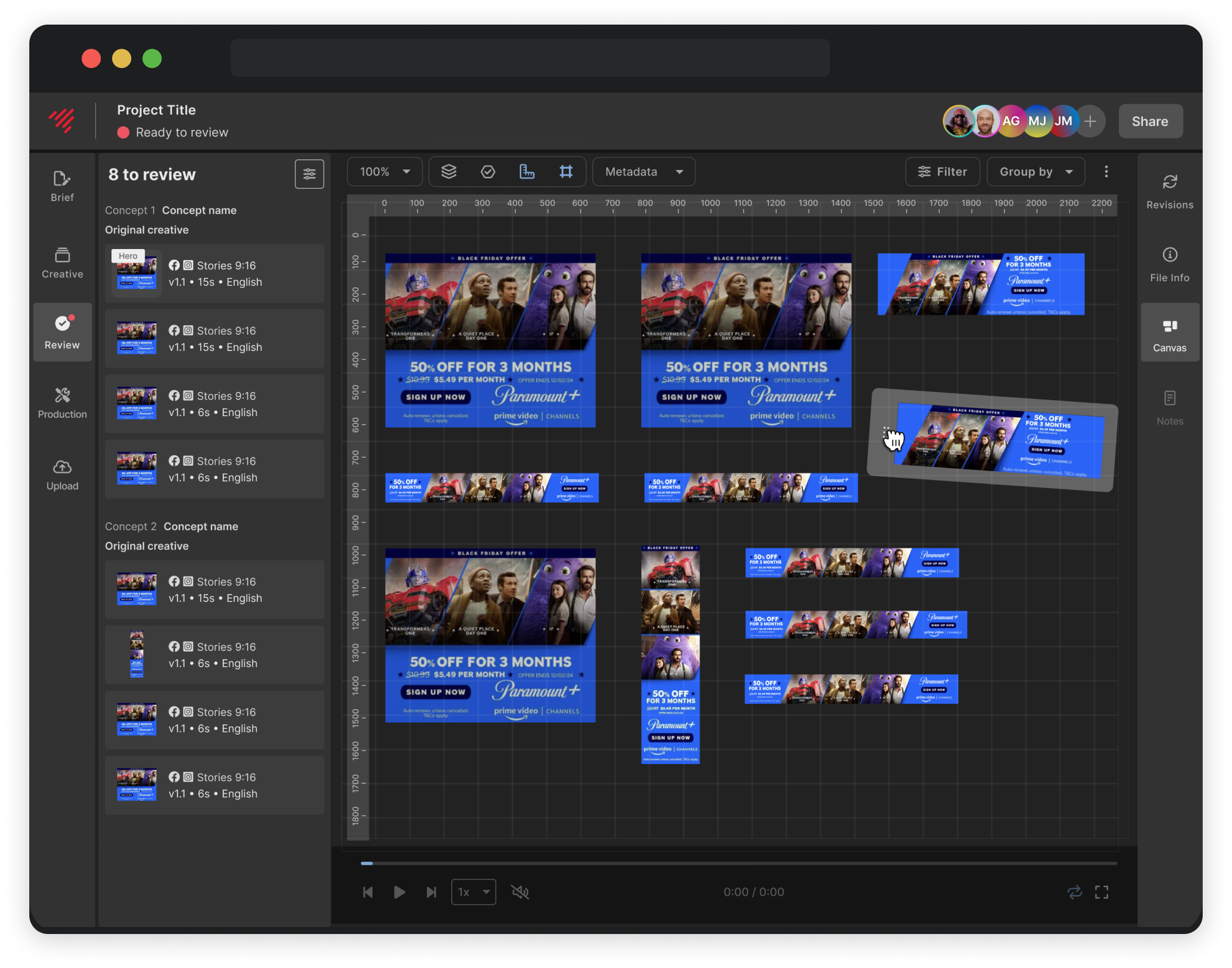
Canvas: Designing a multi-view QA tool to simplify creative review

A new multi-view QA tool that improved review speed by 30% and replaced slow, error-prone workarounds

View project →

Showroom to Screen: Redesigning an e-commerce experience to match a premium brand

A modern e-Commerce redesign that brought their brand to life online, and made it easier for customers to explore and engage with their products.

View project →

Kat McGowan

Home

/

Brand intelligence

Brand intelligence: Surfacing hidden patterns to prevent repeat mistakes

Overview

Our production teams were making repeated mistakes, despite having brand guidelines. One team proposed a solution - a new brand guidelines hub, but I questioned whether that would solve the real issue. 

After revisiting the research, I reframed the problem and proposed a smarter approach: surface brand-related insights directly from real project data (feedback, revisions, emails). This concept became the new direction we aligned on as a team.

The problem

Despite having access to brand guidelines, our production teams were still making the same brand mistakes, often only caught late in the process and resulting in repeated revision rounds and low client satisfaction.

Brand intelligence final proposal

The goal

To make sure everyone working on a brand - whether designer, QA, or creative lead, had access to the most relevant, up-to-date brand information at every stage of the creative process.

Context

This project was handed to me after the initial solution - a revised brand profile - was decided on. I was tasked with mocking up the UI for this solution. While I initially pushed back on the value of this, I agreed to move forward in order to have visuals to centre the discussion around.

Initial proposal - a revised brand profile

Reframing the problem

Hesitation from the team around the value of an updated brand profile allowed me to pause and reframe. Instead of assuming ‘we need better guidelines’, I took a step back and asked:

When do mistakes happen, and what context is missing in that moment?

After reviewing internal workflows and project data, I realised the issue was timing and visibility, not lack of documentation.

The concept

What if we used the data we already collect - revision comments, emails, and phone calls - to surface common brand issues before they happen?

I mocked up a concept that:

  • Flagged recurring issues automatically (e.g. tone, logo use, framing)
  • Integrated directly into production tooling
  • Used AI to cluster and highlight patterns over time

Early concept showing recurring themes for production users

Selecting content to add as a new brand rule

Adding a new brand rule

User feedback

After reviewing the initial concept with users, we determined there were adjustments we could make to improve the output and usefulness.

  • Allowing teams to mark a issue as helpful for this concept or not
  • Insights should be reviewed and summarised by a Creative Director, then shared with designers to avoid ambiguity
  • It should be easy to dismiss or hide irrelevant insights to reduce noise
  • They'd like to see a history of revision insights at any time, even those that were marked as not relevant
  • We’d have to work on tweaking the AI prompt as the feature was used to ensure we were getting the most accurate themes

Outcome

With a new iteration of the concept, I shared with the PM’s, original designer, engineers, and stakeholders. The feedback was positive and the value was clear, both from a business and user perspective. This resulted in:

  • Buy-in to shift direction toward a smarter, insight-driven solution
  • Alignment of two teams around a more scalable, embedded way to prevent brand errors
  • The revised approach is now being scoped for implementation

Final concept of Brand Intelligence in the Review stage

Reflection

This was a reminder that the first solution isn’t always the right one, and that sometimes your real value as a designer is in helping teams slow down, reframe, and re-align.

More projects

Variations: Designing a faster way to scale approved creative

A new flow that lets users scale from approved creative, without starting a new project. Now powering more than 40% of all creative through the platform.

View project →

Canvas: Designing a multi-view QA tool to simplify creative review

A new multi-view QA tool that improved review speed by 30% and replaced slow, error-prone workarounds

View project →

Showroom to Screen: Redesigning an e-commerce experience to match a premium brand

A modern e-Commerce redesign that brought their brand to life online, and made it easier for customers to explore and engage with their products.

View project →

Kat McGowan

Home

/

Brand intelligence

Brand intelligence: Surfacing hidden patterns to prevent repeat mistakes

Overview

Our production teams were making repeated mistakes, despite having brand guidelines. One team proposed a solution - a new brand guidelines hub, but I questioned whether that would solve the real issue. 

After revisiting the research, I reframed the problem and proposed a smarter approach: surface brand-related insights directly from real project data (feedback, revisions, emails). This concept became the new direction we aligned on as a team.

The problem

Despite having access to brand guidelines, our production teams were still making the same brand mistakes, often only caught late in the process and resulting in repeated revision rounds and low client satisfaction.

Brand intelligence final proposal

The goal

To make sure everyone working on a brand - whether designer, QA, or creative lead, had access to the most relevant, up-to-date brand information at every stage of the creative process.

Context

This project was handed to me after the initial solution - a revised brand profile - was decided on. I was tasked with mocking up the UI for this solution. While I initially pushed back on the value of this, I agreed to move forward in order to have visuals to centre the discussion around.

Initial proposal - a revised brand profile

Reframing the problem

Hesitation from the team around the value of an updated brand profile allowed me to pause and reframe. Instead of assuming ‘we need better guidelines’, I took a step back and asked:

When do mistakes happen, and what context is missing in that moment?

After reviewing internal workflows and project data, I realised the issue was timing and visibility, not lack of documentation.

The concept

What if we used the data we already collect - revision comments, emails, and phone calls - to surface common brand issues before they happen?

I mocked up a concept that:

  • Flagged recurring issues automatically (e.g. tone, logo use, framing)
  • Integrated directly into production tooling
  • Used AI to cluster and highlight patterns over time

Early concept showing recurring themes for production users

Selecting content to add as a new brand rule

Adding a new brand rule

User feedback

After reviewing the initial concept with users, we determined there were adjustments we could make to improve the output and usefulness.

  • Allowing teams to mark a issue as helpful for this concept or not
  • Insights should be reviewed and summarised by a Creative Director, then shared with designers to avoid ambiguity
  • It should be easy to dismiss or hide irrelevant insights to reduce noise
  • They'd like to see a history of revision insights at any time, even those that were marked as not relevant
  • We’d have to work on tweaking the AI prompt as the feature was used to ensure we were getting the most accurate themes

Outcome

With a new iteration of the concept, I shared with the PM’s, original designer, engineers, and stakeholders. The feedback was positive and the value was clear, both from a business and user perspective. This resulted in:

  • Buy-in to shift direction toward a smarter, insight-driven solution
  • Alignment of two teams around a more scalable, embedded way to prevent brand errors
  • The revised approach is now being scoped for implementation

Final concept of Brand Intelligence in the Review stage

Reflection

This was a reminder that the first solution isn’t always the right one, and that sometimes your real value as a designer is in helping teams slow down, reframe, and re-align.

More projects

Variations: Designing a faster way to scale approved creative

A new flow that lets users scale from approved creative, without starting a new project. Now powering more than 40% of all creative through the platform.

View project →

Canvas: Designing a multi-view QA tool to simplify creative review

A new multi-view QA tool that improved review speed by 30% and replaced slow, error-prone workarounds

View project →

Showroom to Screen: Redesigning an e-commerce experience to match a premium brand

A modern e-Commerce redesign that brought their brand to life online, and made it easier for customers to explore and engage with their products.

View project →