Home

/

Feedback that fuels growth

Feedback that fuels growth - Microlearning module

Overview

A short, interactive learning module designed to help professionals give clearer, more constructive feedback.

I approached this as a behavioural skill challenge - designing a simple, repeatable structure that helps people move from vague feedback to clear, actionable conversations.

View the module

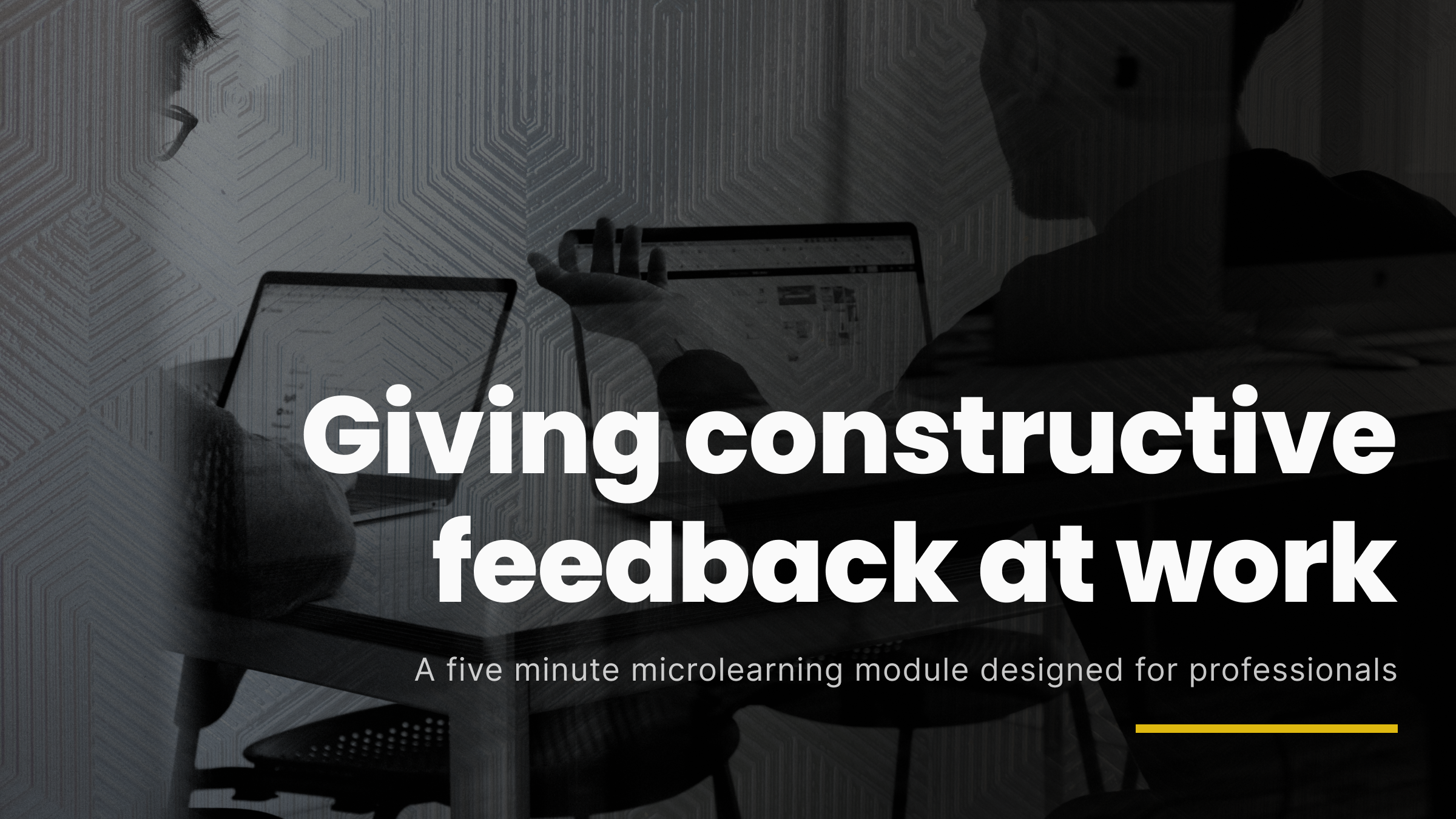
Module header image establishing the tone - simple, direct, and focused on real workplace conversations.

The challenge

Most people know feedback matters, but many still struggle to give it well. It often ends up vague, uncomfortable, or overly personal.

This module helps learners identify what makes feedback effective and apply a simple, repeatable structure.
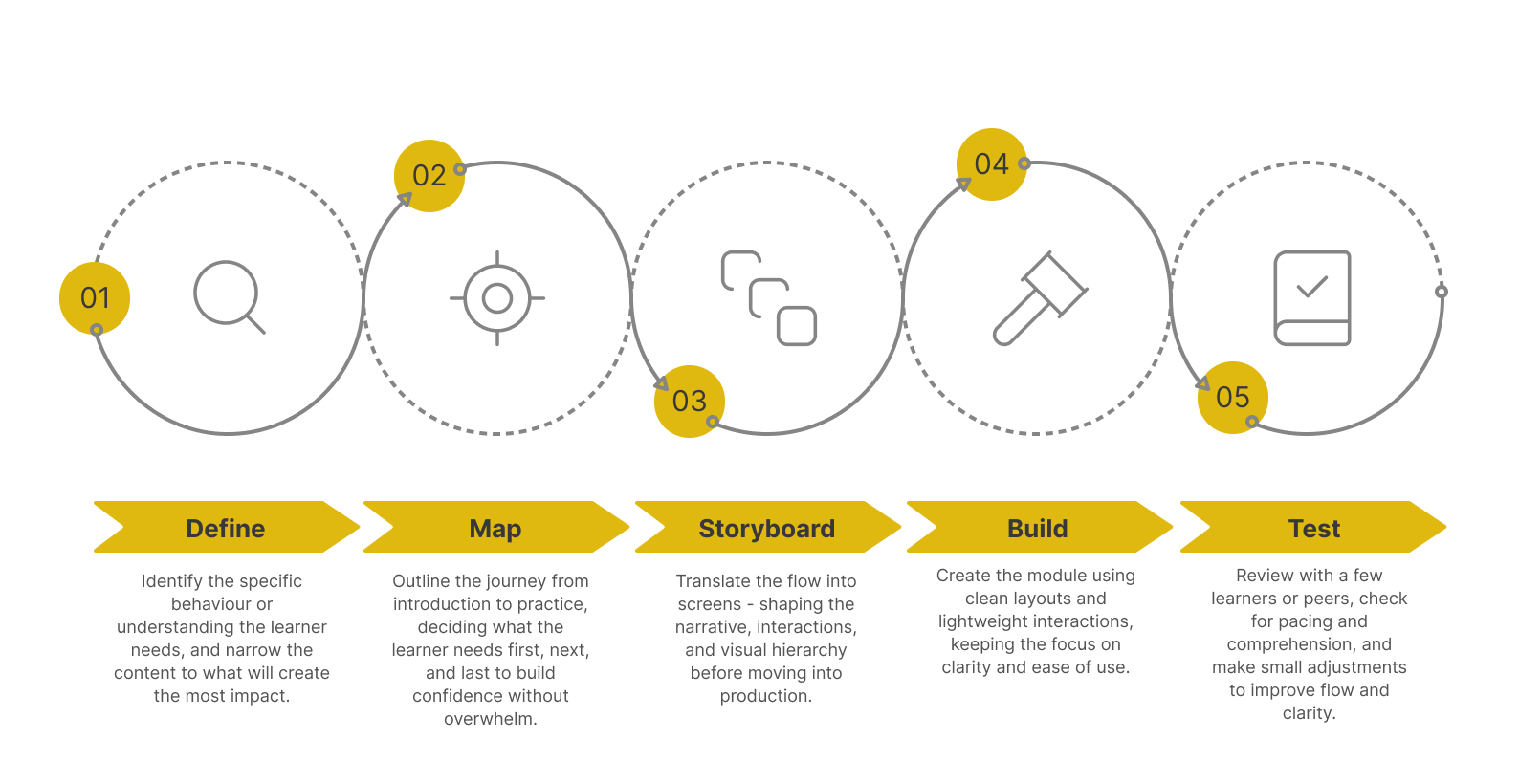
High-level flow showing how the module guides learners from reflection → concept → practice → application

My approach

1. Define the learning goal

Narrowed the focus to a single behaviour: giving clearer, more actionable feedback.

2. Designed a simple learning flow

Structured the module around reflection → concept → practice → application, keeping each section short, skimmable, and easy to follow.

Early design decisions were lightly guided by Gagné’s principles - starting with attention-grabbers, breaking concepts into small steps, and reinforcing learning through quick practice activities.

3. Built for clarity and speed

Storyboarded in Figma, then built in Rise using interactive blocks. Visuals kept flat and minimal to align with my design style and reduce cognitive load.
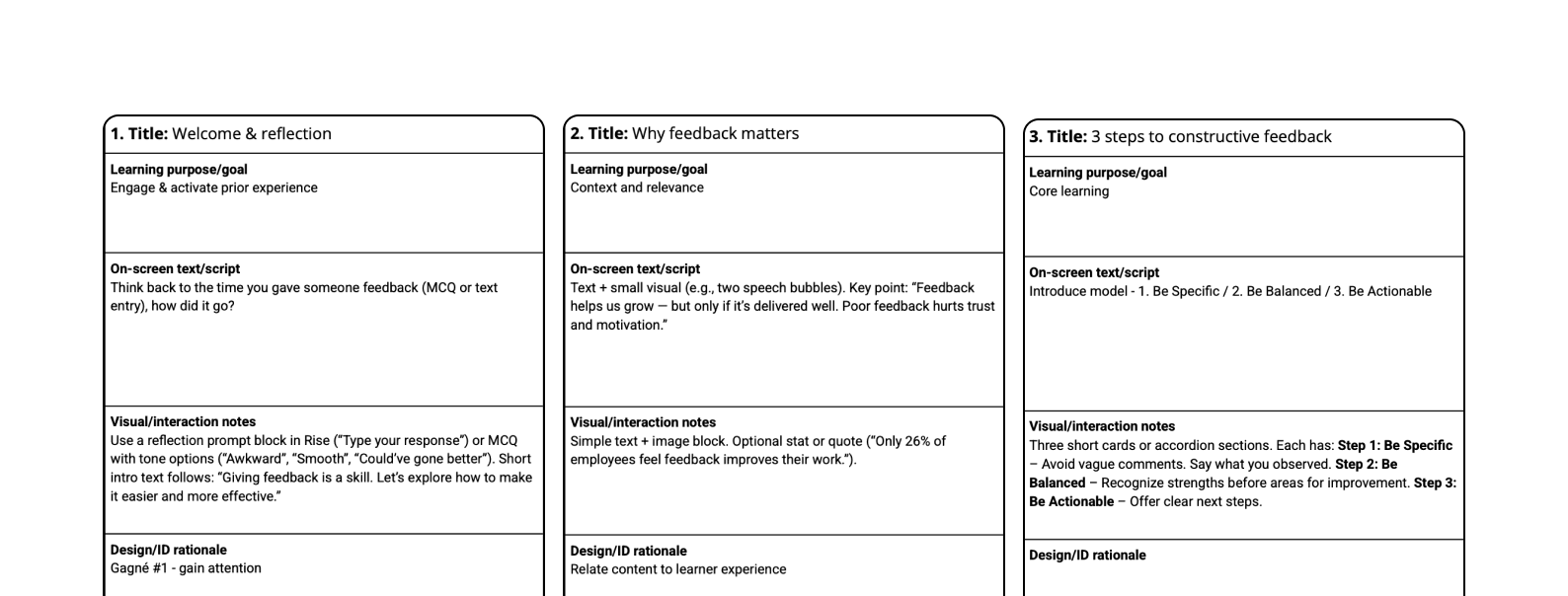
Storyboard used to define pacing, chunking, and transitions before building the module
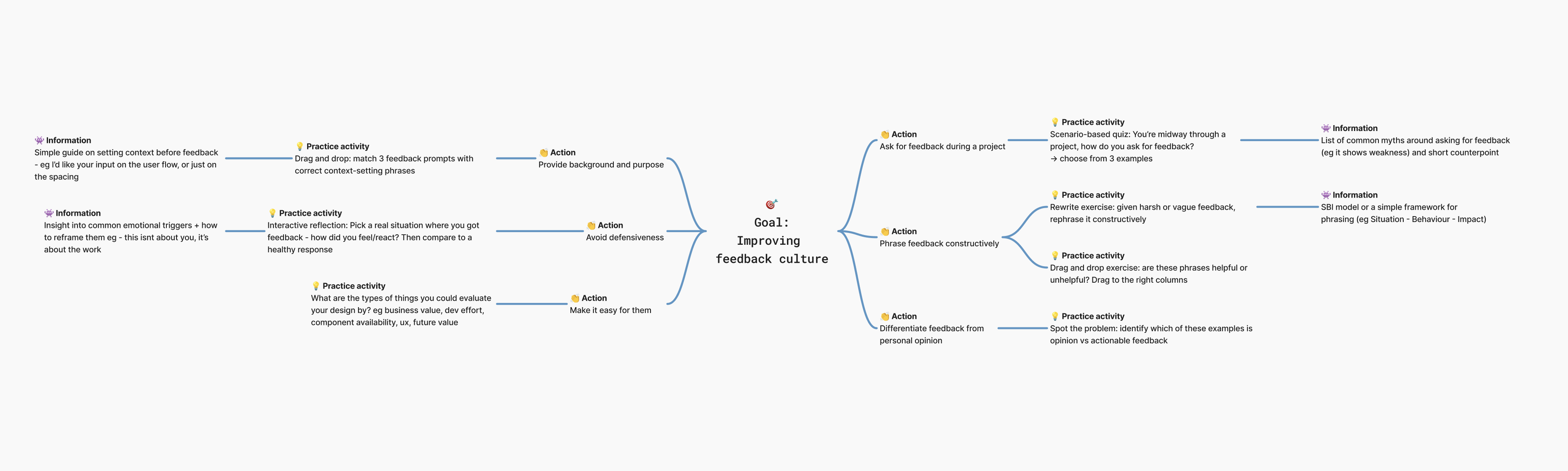
Early action mapping to identify behaviours, misconceptions, and practice opportunities. This evolved into a tighter flow focused on clarity and quick application.

The solution

The final module is a clear, 5-minute experience that moves quickly from reflection → concept → real-world scenarios, without overwhelming the learner.

The tone is practical and human, with minimal ornamentation to keep attention on the core skill.
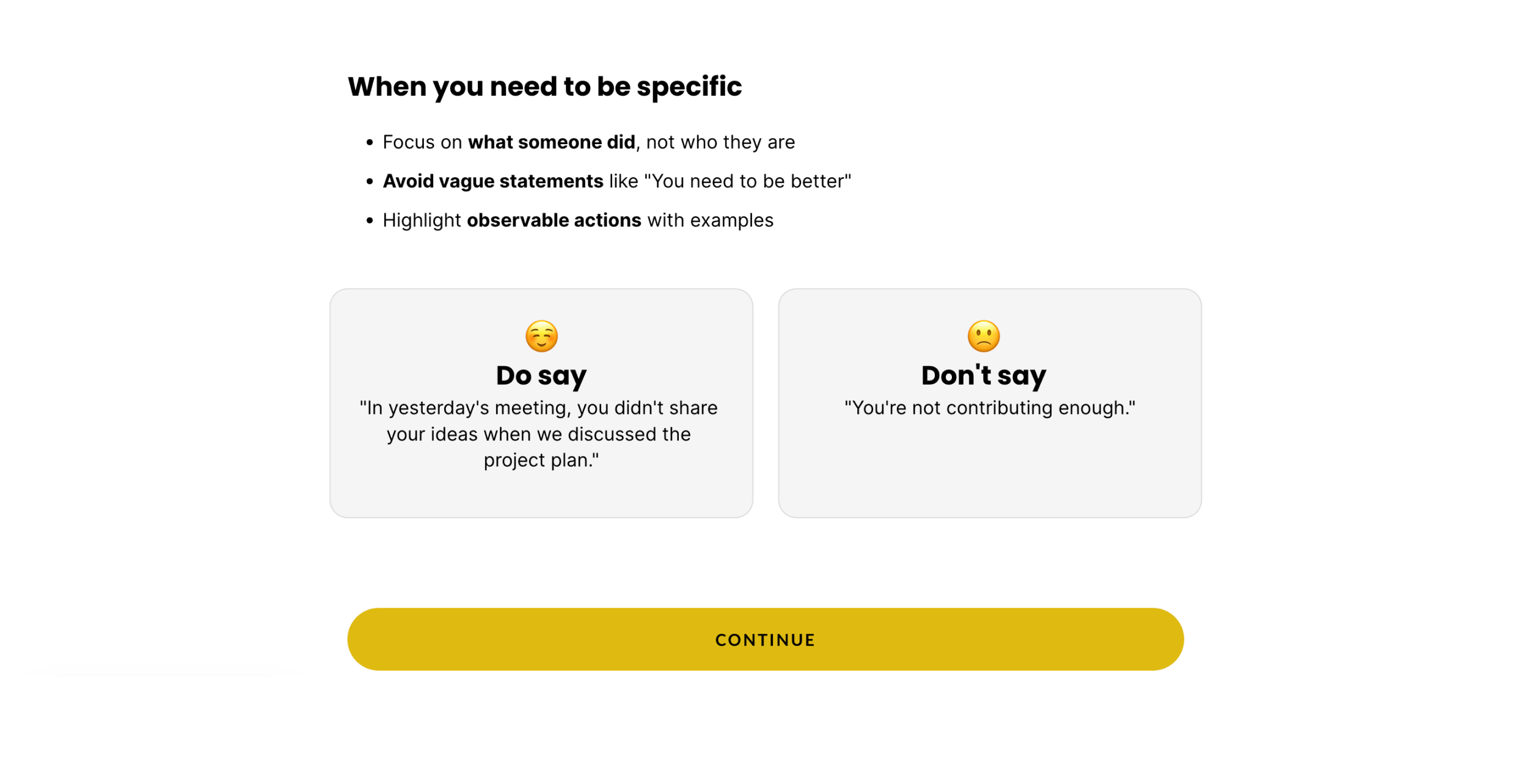
Interaction inviting learners to spot vague vs specific feedback - designed to build quick pattern recognition
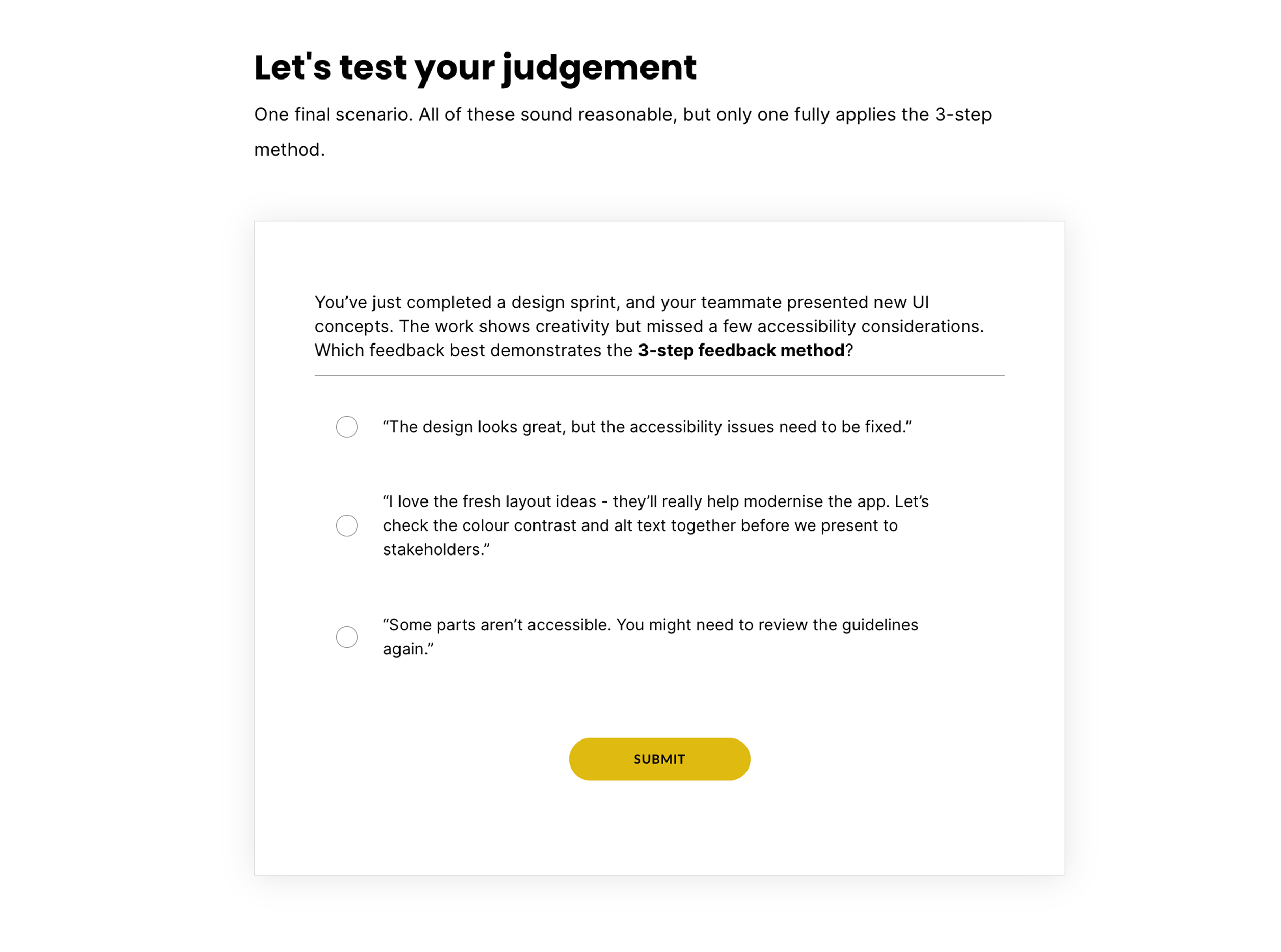
Knowledge check using an applied scenario to reinforce the 3-step method
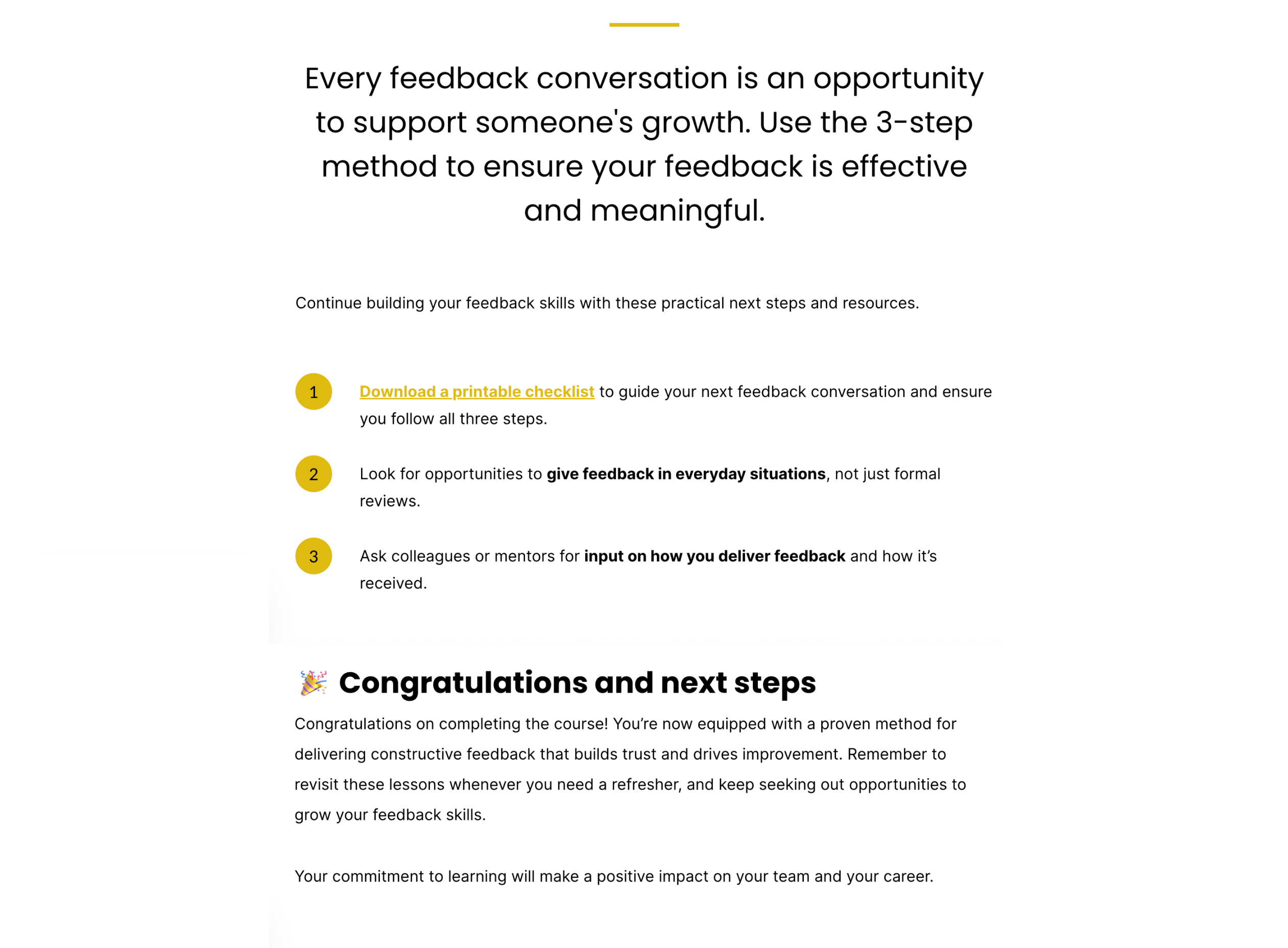
Early concept showing how the core framework and next steps are reinforced at the end of the module.

Results & reflection

Early testers noted the structure felt clear and approachable. The project reinforced the importance of pacing, framing content as decisions (not slides), and designing for quick application.

Next steps

Plan to extend this into a series - “Receiving Feedback Well” and “Using AI Responsibly at Work” - to build a broader foundation for communication and team skills.

Kat McGowan

Home

/

Feedback that fuels growth

Feedback that fuels growth - Microlearning module

Overview

A short, interactive learning module designed to help professionals give clearer, more constructive feedback.

I approached this as a behavioural skill challenge - designing a simple, repeatable structure that helps people move from vague feedback to clear, actionable conversations.

View the module

Module header image establishing the tone - simple, direct, and focused on real workplace conversations.

The challenge

Most people know feedback matters, but many still struggle to give it well. It often ends up vague, uncomfortable, or overly personal.

This module helps learners identify what makes feedback effective and apply a simple, repeatable structure.

High-level flow showing how the module guides learners from reflection → concept → practice → application

My approach

1. Define the learning goal

Narrowed the focus to a single behaviour: giving clearer, more actionable feedback.

2. Designed a simple learning flow

Structured the module around reflection → concept → practice → application, keeping each section short, skimmable, and easy to follow.

Early design decisions were lightly guided by Gagné’s principles - starting with attention-grabbers, breaking concepts into small steps, and reinforcing learning through quick practice activities.

3. Built for clarity and speed

Storyboarded in Figma, then built in Rise using interactive blocks. Visuals kept flat and minimal to align with my design style and reduce cognitive load.

Storyboard used to define pacing, chunking, and transitions before building the module

Early action mapping to identify behaviours, misconceptions, and practice opportunities. This evolved into a tighter flow focused on clarity and quick application.

The solution

The final module is a clear, 5-minute experience that moves quickly from reflection → concept → real-world scenarios, without overwhelming the learner.

The tone is practical and human, with minimal ornamentation to keep attention on the core skill.

Interaction inviting learners to spot vague vs specific feedback - designed to build quick pattern recognition

Knowledge check using an applied scenario to reinforce the 3-step method

Early concept showing how the core framework and next steps are reinforced at the end of the module.

Results & reflection

Early testers noted the structure felt clear and approachable. The project reinforced the importance of pacing, framing content as decisions (not slides), and designing for quick application.

Next steps

Plan to extend this into a series - “Receiving Feedback Well” and “Using AI Responsibly at Work” - to build a broader foundation for communication and team skills.

Kat McGowan

Home

/

Feedback that fuels growth

Feedback that fuels growth - Microlearning module

Overview

A short, interactive learning module designed to help professionals give clearer, more constructive feedback.

I approached this as a behavioural skill challenge, designing a simple, repeatable structure that helps people move from vague feedback to clear, actionable conversations.

View the module

Module header image establishing the tone - simple, direct, and focused on real workplace conversations.

The challenge

Most people know feedback matters, but many still struggle to give it well. It often ends up vague, uncomfortable, or overly personal.

This module helps learners identify what makes feedback effective and apply a simple, repeatable structure.

High-level flow showing how the module guides learners from reflection → concept → practice → application

My approach

1. Define the learning goal

Narrowed the focus to a single behaviour: giving clearer, more actionable feedback.

2. Designed a simple learning flow

Structured the module around reflection → concept → practice → application, keeping each section short, skimmable, and easy to follow.

Early design decisions were lightly guided by Gagné’s principles - starting with attention-grabbers, breaking concepts into small steps, and reinforcing learning through quick practice activities.

3. Built for clarity and speed

Storyboarded in Figma, then built in Rise using interactive blocks. Visuals kept flat and minimal to align with my design style and reduce cognitive load.

Storyboard used to define pacing, chunking, and transitions before building the module

Early action mapping to identify behaviours, misconceptions, and practice opportunities. This evolved into a tighter flow focused on clarity and quick application.

The solution

The final module is a clear, 5-minute experience that moves quickly from reflection → concept → real-world scenarios, without overwhelming the learner.

The tone is practical and human, with minimal ornamentation to keep attention on the core skill.

Interaction inviting learners to spot vague vs specific feedback - designed to build quick pattern recognition

Knowledge check using an applied scenario to reinforce the 3-step method

Early concept showing how the core framework and next steps are reinforced at the end of the module.

Results & reflection

Early testers noted the structure felt clear and approachable. The project reinforced the importance of pacing, framing content as decisions (not slides), and designing for quick application.

Next steps

Plan to extend this into a series - “Receiving Feedback Well” and “Using AI Responsibly at Work” - to build a broader foundation for communication and team skills.